A Bus Ride and Gepetto
I like to talk with Gepetto (aka chatGPT) — for me it has become a way of "journalism" activity.
This idea came to me on the bus, just making funny images... "create an image of the team spreading the application through the corridors."
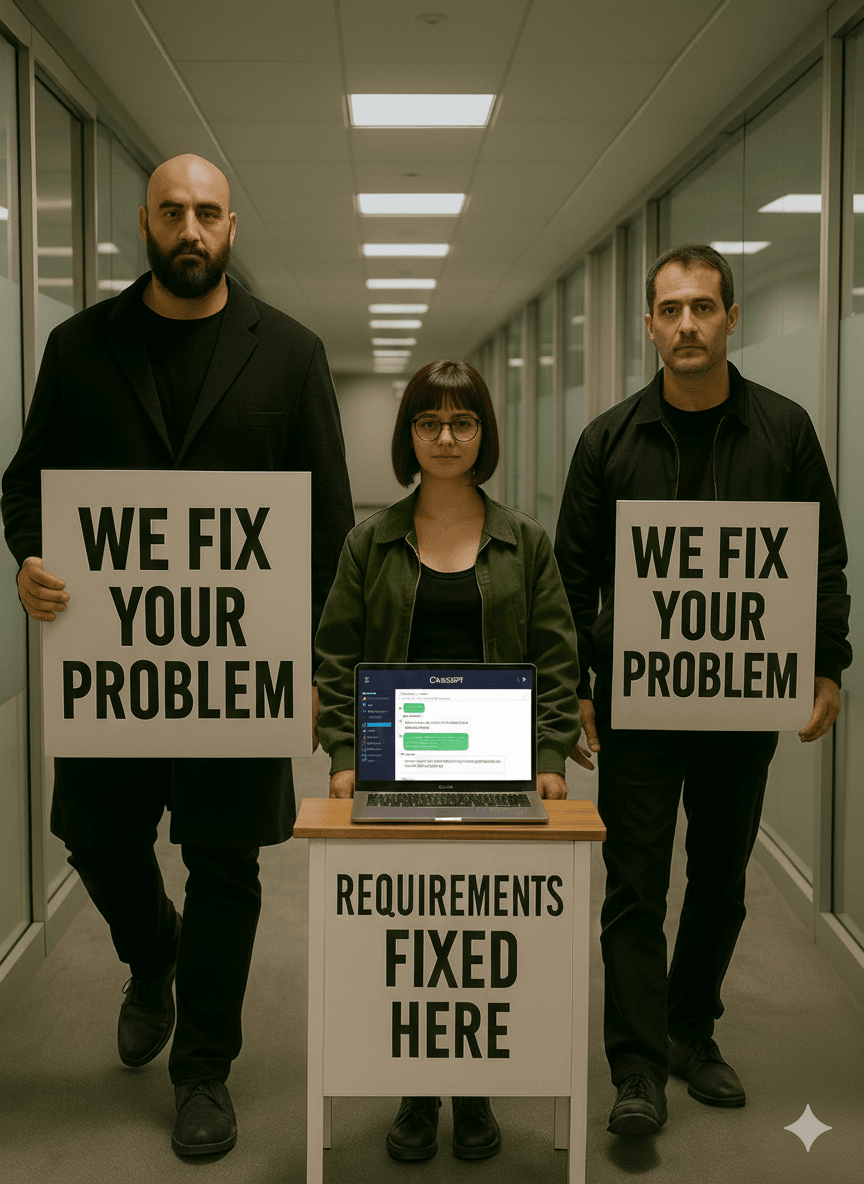
I shared this image with my team, and all of them laughed. They loved it. They had amazing ideas — even unexpectedly the most serious persons in the room. We agreed to somehow execute that ridiculous idea.
So I got back to my Gepetto conversation and started to create a plan about adoption. Not a boring demo session. An actual, physical, disruptive presence.
The strategy
Another day, walking down the street, I looked again with fresh eyes at this Fello poster I'd loved from the first time I saw it — an elderly woman holding a tiger. Completely nonsensical. But you *remember* it. You stop. You look.
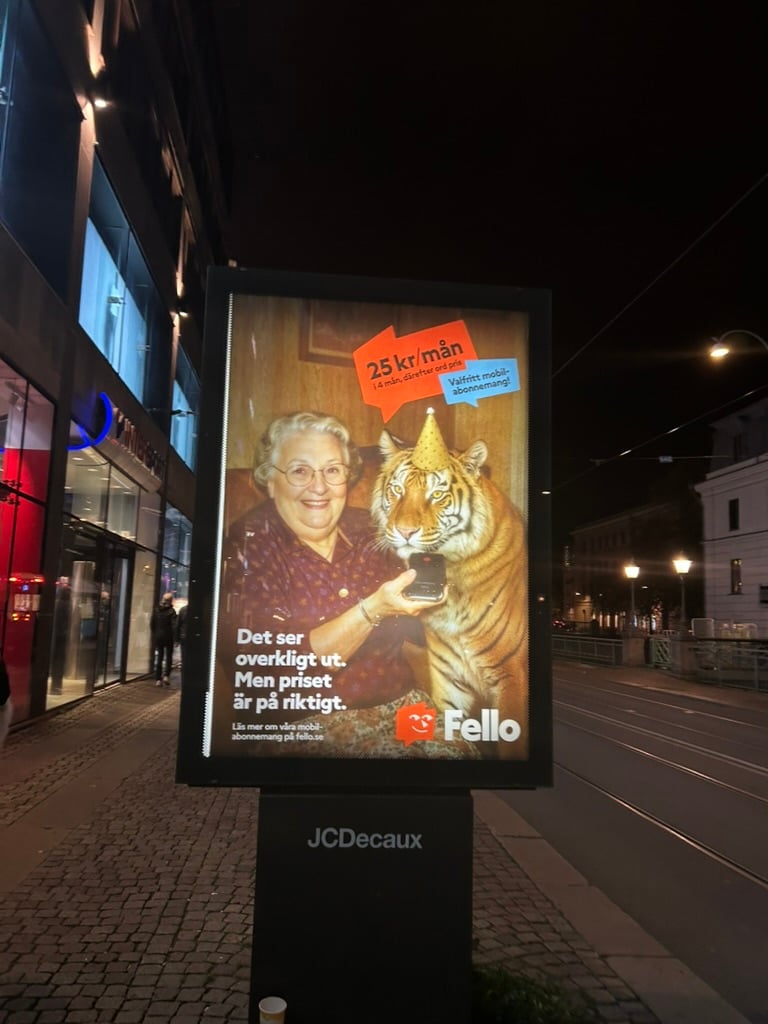
Something clicked. That's what we needed. Not a corporate poster. Something absurd that made people pause and think "...wait, what?"
With my team, we agreed the poster itself was a conversation starter, My teammate who suggested it wanted to play with scale and curiosity: a big headline that catches attention from afar, then as people get closer, they keep reading.
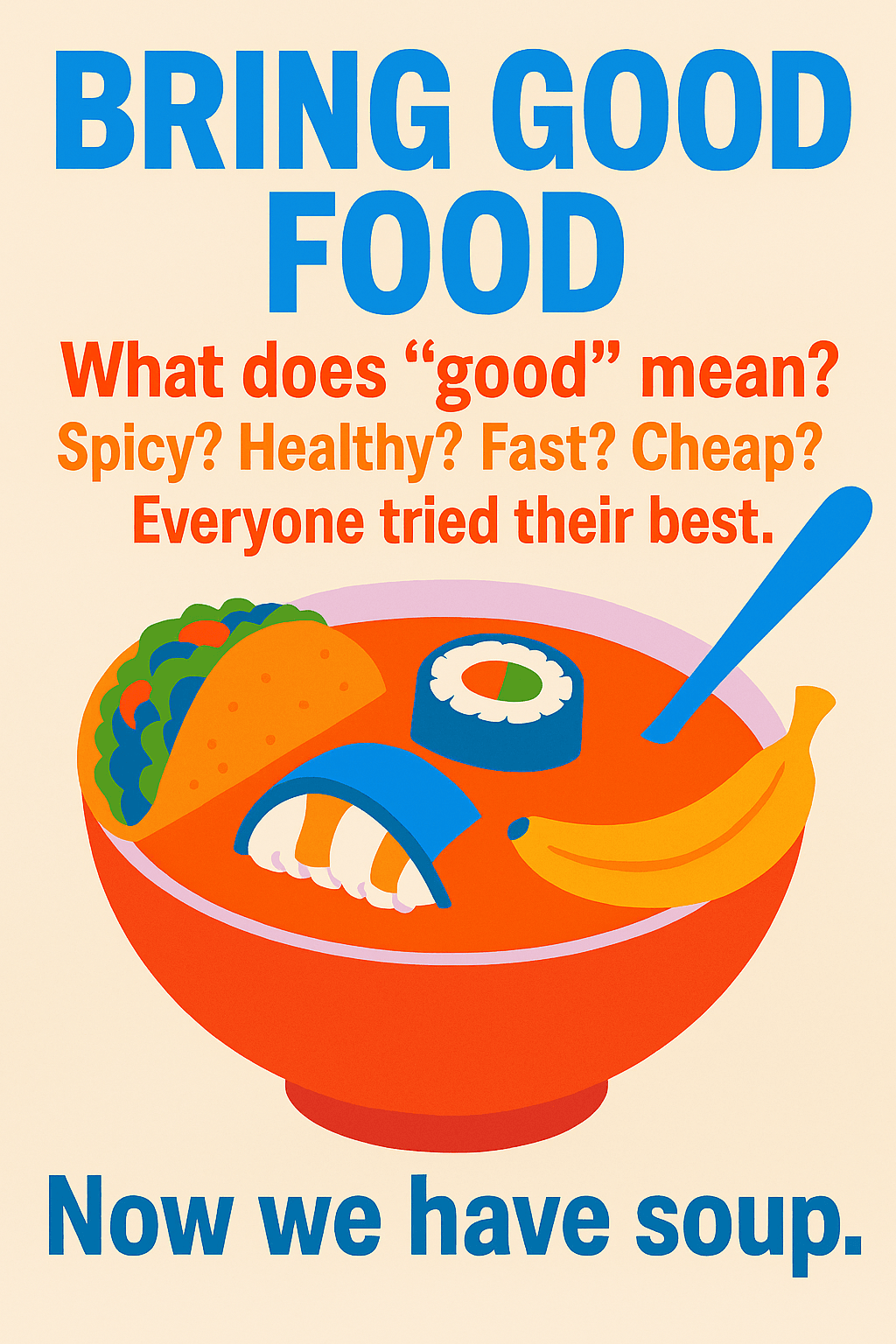
So we positioned ourselves right in front of the office restaurant during lunch hour. People walking to get their meal would see us first, holding this ridiculous sign asking them to bring *us* food.
The Execution
Picture this: three people with homemade signs, a laptop ready to demo, standing in common areas where people pass by.
But we didn't just stand there waiting. We split the work: my teammates stayed at our "station" with the laptop, ready to do calm demos at the table. I grabbed the poster and dove into the sea of people — approaching them in corridors, the lunch line, anywhere.
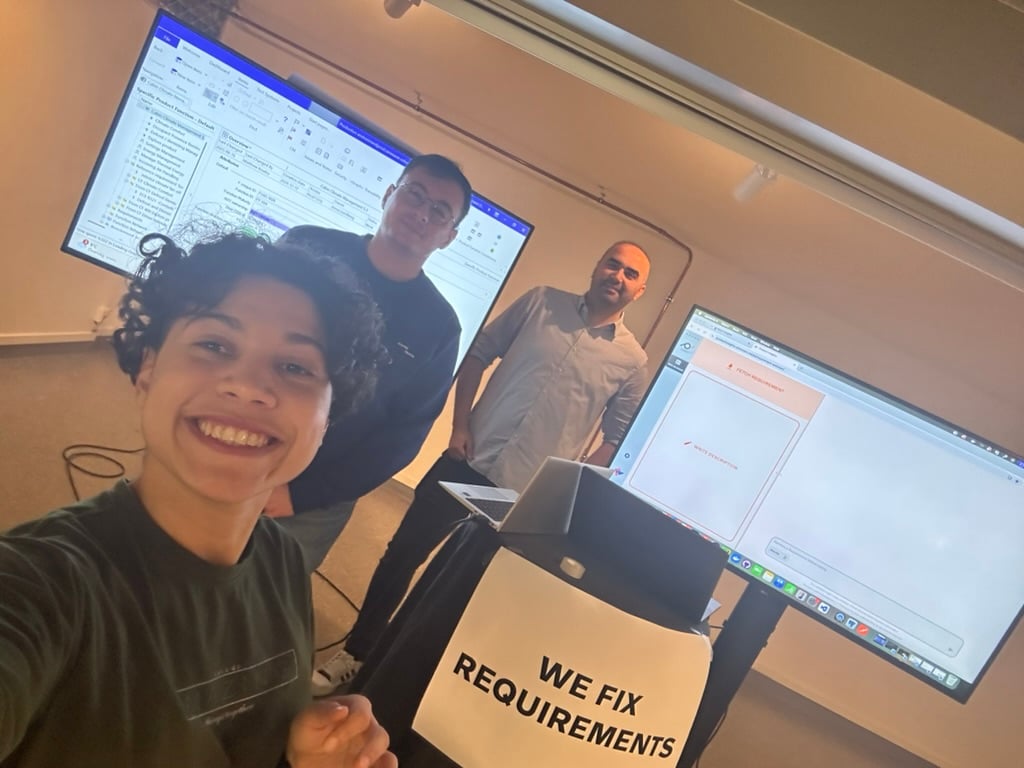
It felt ridiculous. We were essentially cold-calling people in real life.
I'd start conversations casually:
"Hey, have you heard about this tool?"
"Do you work with this tool?"
"Want to see something that might save you 2 hours a week?"
But something unexpected happened.
People saw the signs and smiled. They laughed. They engaged. Instead of walking past us like we were street vendors, they stopped. They asked questions. They told us about teammates who might be interested. Some walked with us straight to the demo.
The weirdness broke down barriers. In a corporate environment where everyone's guarded and busy, holding a silly poster about soup made us approachable. Human.
The Results
In two hours, we got:
✨ 50 new prospects ("seeds" as we called them) 👋 Invites to present in three different teams 💬 Referrals from people who hadn't even tried the tool — they just told a colleague about it
The tool went from invisible to "wait, what's this everyone's talking about?"
Making It Easy to Spread
But here's the thing — finding connectors isn't enough. You need to give them the tools to actually spread the word.
So we built the infrastructure:
A Teams channel for ongoing communication and updates
A Confluence wiki with documentation and FAQs
An official portal announcement for legitimacy
We weren't just creating awareness. We were creating a system where:
People could easily learn more (wiki)
Stay updated (Teams channel)
Ask questions (community)
The Connection I Didn't Know I Was Making
Later that night, I was explaining the whole experiment to my husband. The posters, the QR codes, how adoption spread through specific people rather than broadcasts.
He stopped me: *"You basically did what Veritasium explains in that video — you built shortcuts in a small-world network."*
I had no idea what he meant. So he showed me.
The concept: in any large network (like a company), most people are clustered in small groups. But a few specific people bridge these clusters — the person in three Slack channels, the engineer who pair-programs across teams, the one everyone asks for tool recommendations.
These are the connectors. Reach them, and you don't need to reach everyone else.
That's what we did. We didn't spam the company. We found the right 5-10 people and gave them:
Something memorable (ridiculous poster)
A reason to care (solves their problem)
An easy way to share (QR code, resources)
They did the rest.
What I Learned
1. Visibility is a feature If people don't know your product exists, nothing else matters. Design the discovery experience as carefully as you design the product itself.
2. Sometimes you need to be disruptive In a sea of Slack messages and Confluence pages, a physical presence with a ridiculous poster cuts through the noise.
3. People want to help (if you make it easy) The warmth and openness we encountered surprised me. That shift in framing changed everything.
4. Build infrastructure, not just awareness Finding your connectors is half the battle. The other half is making it effortless for them to spread the word. A QR code. A ready-made wiki. A channel to join. Remove every point of friction.
5. Start small, create momentum 50 people in 2 hours became 200 people in a week. Early adopters become your evangelists if you give them something to talk about.
The Takeaway
If you're building internal tools, don't underestimate storytelling, design, and a bit of fun.
Make noise. Show up. Find your connectors.
Because in the end, the best product in the world doesn't matter if it's invisible.